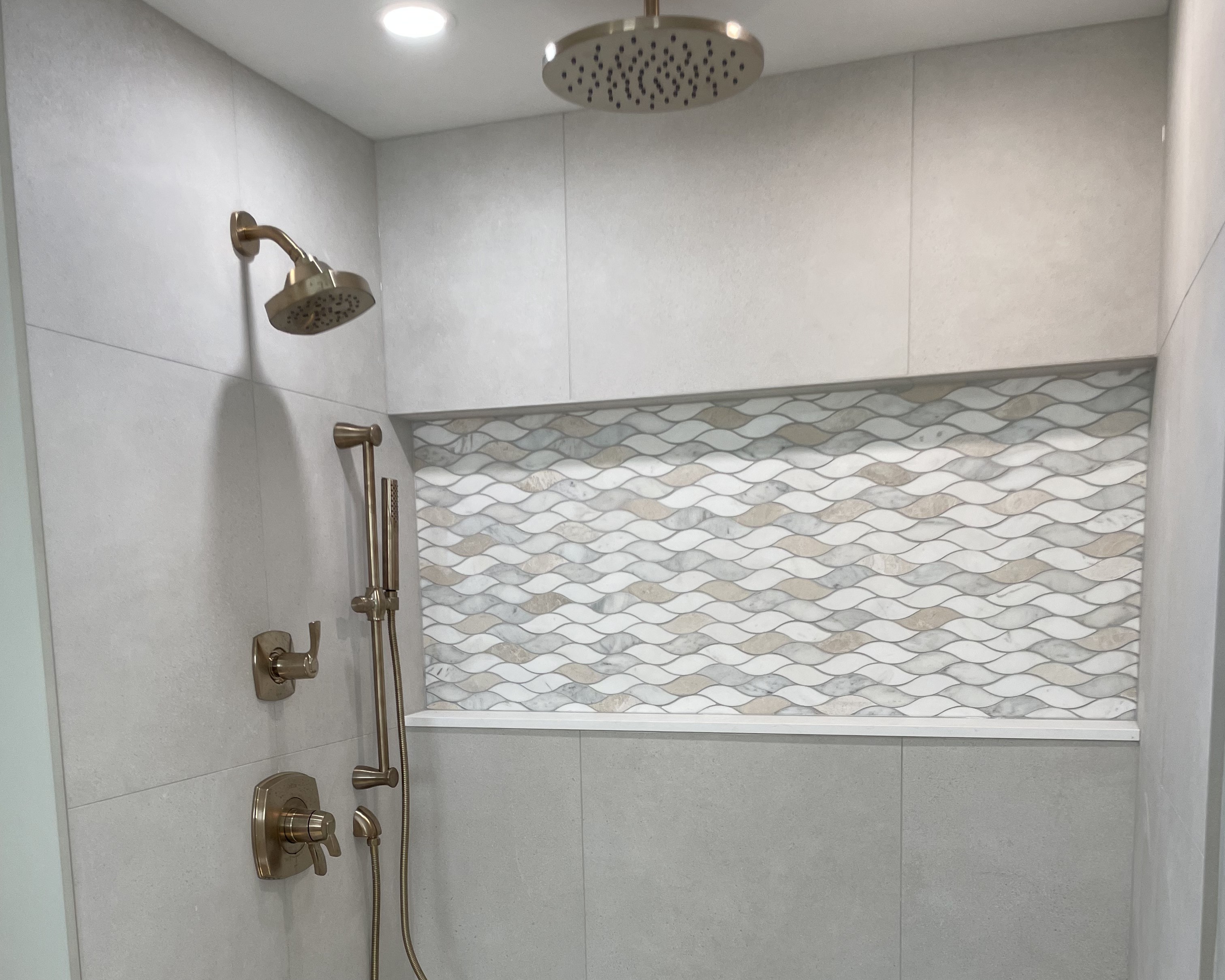
Porcelain vs. Ceramic Tile for Showers: Which Is Better?
Is porcelain or ceramic tile better for a shower?
Porcelain tile is better than ceramic tile for shower walls and floors in most situations. Porcelain absorbs less than 0.5% water by weight compared to ceramic's 0.5–3%, making it significantly more resistant to moisture damage in a wet environment. For shower floors, small-format porcelain mosaic tile is the standard professional recommendation. For shower walls, large-format porcelain in a 12x24 or 24x48 format performs well and is easiest to keep clean.
The Core Difference Between Porcelain and Ceramic Tile
Both porcelain and ceramic tile are made from clay fired at high temperatures, and at first glance they can look nearly identical. But the differences in how they are made have significant real-world consequences for how they perform in a wet environment like a shower.
Understanding the difference between these two tile types will help you make a better decision for your project, whether you are replacing a shower in a Lunenburg colonial, updating a master bath in Acton, or remodeling a bathroom in an older Fitchburg home.
Composition and Density
Porcelain tile uses a denser, more refined clay mixture and is fired at significantly higher temperatures than ceramic. The result is a tile that is harder, denser, and far less porous than its ceramic counterpart. This density is the core reason porcelain performs better in wet environments.
The industry standard measurement for this difference is water absorption rate. Porcelain tile is classified as vitreous or impervious, absorbing less than 0.5% water by weight. Ceramic tile typically absorbs between 0.5% and 3%, depending on the quality and firing temperature. That gap matters in a shower that gets used every day for years.
Hardness and Surface Durability
Porcelain is harder than ceramic. The Mohs hardness scale puts most porcelain tile between 6 and 7, compared to ceramic which typically falls between 5 and 6. In a shower that takes daily use, a harder surface resists wear, scratching, and chipping better over time.
The hardness of porcelain also has an installation consequence worth knowing. Porcelain is more difficult to cut cleanly. It requires a high-quality wet saw and experienced technique to avoid chipping at the cut edges. This is one reason why porcelain installation costs slightly more in labor than standard ceramic, particularly for large-format tiles that require more precise cuts.
Which Tile Is Better for Shower Walls?
For shower walls, porcelain tile in a large format is the professional standard recommendation and currently the most requested choice by homeowners across central Massachusetts. Here is why.
Large-Format Porcelain on Shower Walls
Large-format porcelain in a 12x24 or 24x48 format has become the dominant choice for shower wall tile in new installations and remodels. The larger tiles mean fewer grout joints on the wall surface, which reduces the area where soap scum and mildew can accumulate. A 12x24 shower wall has roughly 60% fewer grout joints than the same area covered in 4x4 ceramic subway tile.
Fewer grout joints also means a cleaner, more modern aesthetic that complements contemporary bathroom design. The tile appears to flow continuously rather than being visually broken up every few inches. For homeowners in the Acton and Harvard area where home values and finish expectations are higher, large-format porcelain is almost always the right choice.
Can You Use Ceramic Tile on Shower Walls?
Yes, ceramic tile can be used on shower walls, and it can work well when installed correctly. A high-quality glazed ceramic subway tile on a properly waterproofed shower wall will perform adequately for many years. The glaze provides surface water resistance even though the tile body beneath is more porous than porcelain.
The limitations of ceramic on shower walls are primarily long-term. The glaze can chip over time, particularly at cut edges that were not finished with a tile saw. Once the glaze is compromised, the underlying ceramic body is exposed to moisture absorption. In showers that get daily use, this can lead to staining and gradual degradation that porcelain resists much better.
For homeowners on a tighter budget, a quality glazed ceramic tile is a reasonable choice for shower walls. For homeowners who want a 15 to 20-year installation with minimal maintenance issues, porcelain is the better investment.
Which Tile Is Better for Shower Floors?
The shower floor question has a different answer than the walls, and tile size matters as much as tile type.
Small-Format Porcelain for Shower Floors
Small-format porcelain mosaic tile in a 1x2, 2x2, or penny round format is the professional standard recommendation for shower floors. The smaller tile size serves a specific functional purpose: the tiles conform to the slope of the shower floor more accurately than large tiles, and the additional grout joints provide traction that large-format tile cannot match.
A properly sloped shower floor directs water toward the drain. Achieving that slope with 24x24 or 24x48 tile is significantly more challenging than achieving it with 2x2 mosaic. The large tiles tend to create lippage, which is the height difference between adjacent tile edges that creates an uneven, trip-hazard surface. Small-format tile lays flat more easily on a sloped surface.
Why Large-Format Tile on Shower Floors Is Problematic
We regularly get requests for large-format tile on shower floors because homeowners see design images they like online. The challenge is that those images often come from professional shoots in showrooms or newly completed installations. What they do not show is the long-term performance of large tile on a sloped, wet surface.
Large-format tile on shower floors requires a more precise mud bed and a more complex installation to achieve the correct slope without lippage. When done incorrectly, the result is a floor that pools water, has uneven surfaces that are uncomfortable and potentially unsafe underfoot, and develops maintenance problems faster. When done correctly by an experienced installer, it can work, but it adds cost and complexity to the project.
Our recommendation for virtually every shower floor: small-format porcelain mosaic. It performs better, installs more reliably, and is safer underfoot.
Cost Comparison: Porcelain vs. Ceramic Tile for a Shower
Ceramic tile is less expensive than porcelain. The material cost difference for a typical shower varies based on the specific tiles selected, but as a general framework:
•Entry-level ceramic tile: $1.50 to $3.50 per square foot
•Mid-range ceramic tile: $3.50 to $6.00 per square foot
•Entry-level porcelain tile: $3.00 to $6.00 per square foot
•Mid-range porcelain tile: $6.00 to $12.00 per square foot
•Large-format or premium porcelain: $10.00 to $20.00+ per square foot
For a standard walk-in shower with approximately 80 to 100 square feet of wall and floor tile surface, the material cost difference between choosing a mid-range ceramic versus a mid-range porcelain runs between $200 and $400. That is a relatively small premium for a meaningful improvement in long-term performance.
Installation labor costs are similar between ceramic and porcelain for standard formats. Large-format porcelain adds labor cost because of the additional precision required in cutting and setting.
What We Recommend at Grams Tile for Central Massachusetts Showers
For homeowners in Lunenburg, Fitchburg, Leominster, Acton, and the surrounding area, our standard recommendation is:
•Shower walls: large-format porcelain in 12x24 or 24x48, either rectified or pressed depending on the layout and budget
•Shower floor: small-format porcelain mosaic in 1x2 or 2x2, matte finish for best traction
•Transition areas and niches: same tile as the wall or a complementary mosaic accent
This combination delivers the best long-term performance, the cleanest aesthetic, and the most manageable maintenance for homeowners who use their shower every day.
If you have a specific tile in mind or a design direction you are working toward, bring it to the consultation. We are happy to evaluate any tile selection and give you an honest assessment of how it will perform in your specific shower before you commit to purchasing.
Frequently Asked Questions: Porcelain vs. Ceramic Tile
Can I use ceramic tile in a walk-in shower?
Yes. Glazed ceramic tile can be used in showers, particularly on walls. A quality glazed ceramic tile on a properly waterproofed shower wall will perform adequately. For shower floors, porcelain mosaic is the better choice because of its lower water absorption and the installation advantages of smaller tile sizes on sloped surfaces. If budget is a significant constraint, ceramic on the walls with porcelain mosaic on the floor is a practical middle-ground option.
Is porcelain tile harder to install than ceramic?
Porcelain is harder and denser, which makes cutting it more demanding. It requires a high-quality wet saw and experienced technique, particularly for clean cuts at tile edges and for mitered corners. Installation costs for porcelain are slightly higher than for ceramic, and significantly higher for large-format porcelain that requires precise cuts. The performance difference justifies the additional cost for most shower applications.
What is the best tile finish for a shower?
For shower walls, a polished or satin finish on porcelain or ceramic tile provides the easiest cleaning experience. For shower floors, a matte or textured finish is safer because it provides traction when wet. Never use high-gloss tile on a shower floor. For the transition between wall tile and floor tile, a bullnose or schluter trim piece provides a clean finished edge.
How do I know if a tile is rated for wet areas?
Look for the tile's PEI (Porcelain Enamel Institute) rating and water absorption classification on the product specification sheet. For shower walls, any PEI rating works. For shower floors, use tile rated PEI 3 or higher with a water absorption rate under 0.5% (vitreous or impervious classification). Your tile retailer or installer can help you verify the rating before purchase.
Who installs porcelain and ceramic tile showers near Lunenburg and Fitchburg, MA?
Grams Tile, Inc. installs tile showers throughout north-central Massachusetts including Lunenburg, Fitchburg, Leominster, Acton, Groton, Littleton, Harvard, Hudson, Lancaster, and Ayer. We help homeowners select the right tile for their specific shower, provide proper waterproofing, and install with the precision that makes a shower last. Call (978) 382-0639 for a free estimate.
