How Tile Shower Waterproofing Works (And Why Showers Fail)
How is a tile shower waterproofed?
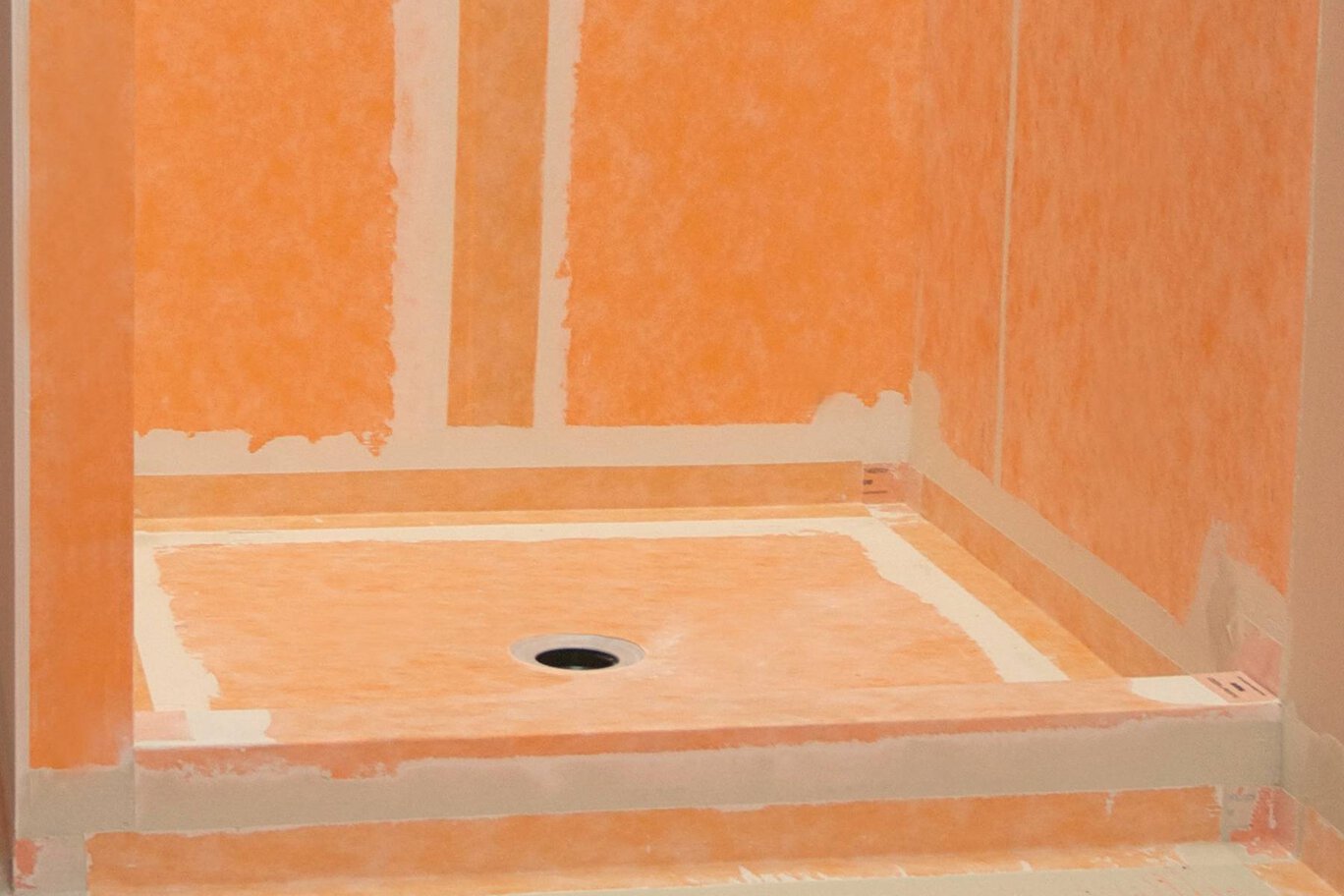
A tile shower is waterproofed by applying a continuous waterproof barrier behind the tile on both the walls and the floor before any tile is installed. Professional installers use either a sheet membrane system (such as Schluter Kerdi or WEDI), a liquid-applied membrane (such as RedGard or Hydro Ban), or a combination of both depending on the shower design. The waterproofing system must cover all surfaces, seal every seam and penetration, and cure fully before tile is installed over it. Skipping or rushing this step is the primary cause of tile shower leaks.
Why Waterproofing Is the Most Important Part of Any Tile Shower
If you ask most homeowners what makes a tile shower last, they will tell you the tile quality, the grout, or the craftsmanship of the installation. Those things matter, but none of them is the most important factor. The most important factor is what you cannot see: the waterproofing system behind the tile.
Tile is not inherently waterproof. Grout is not waterproof. Even the best tile installation in the world will allow moisture to migrate through the grout joints and into whatever is behind the tile over time. In a properly built shower, that moisture is captured by the waterproofing membrane and directed safely to the drain. In a shower without proper waterproofing, that moisture travels into the wall framing and subfloor, causing damage that is often invisible for months or years before it becomes a major problem.
At Grams Tile, we repair and rebuild failing showers regularly in homes across Lunenburg, Fitchburg, Leominster, Acton, and the surrounding communities. The cause is almost always inadequate waterproofing or no waterproofing at all. This guide explains what proper shower waterproofing looks like and why it matters so much.
How a Tile Shower Is Supposed to Be Waterproofed
The Principle: Waterproofing Behind the Tile, Not the Tile Itself
The core principle of modern shower waterproofing is to create a continuous waterproof barrier on the structural surface, the wall substrate and the shower floor, before any tile is installed. The tile and grout sit in front of this barrier, not behind it. When moisture passes through the grout joints and the thinset layer, it hits the membrane and cannot penetrate further.
This is categorically different from older methods that relied on tar paper or standard cement board behind the tile without a membrane. Those methods allowed moisture to migrate through the substrate over time. Modern membrane waterproofing systems stop moisture at the surface of the substrate and redirect it toward the drain.
The Shower Floor: Slope and Membrane
The shower floor requires two things to function correctly: proper slope toward the drain and a continuous waterproof membrane across the entire floor surface, extending up the curb and onto the bottom of the walls.
The slope is typically 1/4 inch of drop per linear foot, directing water toward the drain opening. Achieving this slope requires either a pre-sloped foam shower pan or a correctly formed mortar bed. Both approaches work. What matters is that the slope is consistent and that the membrane covers the entire sloped surface without gaps or wrinkles.
The drain assembly itself must also be waterproof. Most professional waterproofing systems include a drain clamping ring or bonding flange that integrates the membrane directly into the drain body, creating a watertight connection at the most vulnerable point in the shower floor.
The Shower Walls: Membrane Coverage from Floor to Height
On shower walls, the waterproofing membrane must cover every surface that will be exposed to water. For a standard shower, this means from the floor up to at least 6 inches above the showerhead height. Many professional installers waterproof from floor to ceiling on all shower walls as a standard practice, eliminating any ambiguity about whether the membrane reaches high enough.
All inside corners where two walls meet, and where the floor meets the wall, must be reinforced with fabric tape set in the membrane material. These are the highest-stress points in the installation where the membrane is most likely to develop cracks or separations over time if not properly reinforced.
Every penetration through the membrane, including the showerhead pipe stub, valve bodies, and any shelf supports anchored into the wall, must be sealed with membrane material or a purpose-built penetration seal. A single unsealed screw hole is enough to allow water infiltration over time.
Types of Waterproofing Systems Used in Tile Showers
Sheet Membrane Systems: Schluter Kerdi and WEDI
Sheet membrane systems use a pre-fabricated membrane material that is bonded to the substrate and then tiled directly over. Schluter Kerdi is the most widely known system of this type. It consists of a polypropylene fleece-covered foam sheet that bonds to the substrate with unmodified thinset mortar and provides an immediate waterproof barrier once installed.
Sheet membrane systems have specific advantages: they are fast to install, they provide an immediate waterproof surface that can be tiled as soon as the bonding mortar cures, and their performance characteristics are well-documented. Schluter Kerdi includes a complete system of matching components including corners, seam tape, drain flanges, and waterproof shelf units that integrate into the membrane system seamlessly.
The limitation of sheet membranes is that they require precise cuts and careful installation around penetrations and at corners. Any gap or improperly sealed seam is a potential failure point.
Liquid-Applied Membrane Systems: RedGard and Hydro Ban
Liquid-applied membranes are applied to the substrate surface with a roller or brush, similar to painting. They dry to form a continuous, seamless membrane that covers the entire surface including corners and penetrations without the need for additional seam tape.
RedGard (by Custom Building Products) and Hydro Ban (by Laticrete) are the most common liquid-applied systems. RedGard applies pink and dries to red, providing a clear visual indicator of full coverage. It requires a minimum of two coats and must reach the manufacturer's specified dry film thickness to be effective.
Liquid-applied membranes are particularly useful in showers with complex shapes, multiple niches, or intricate designs where cutting sheet membrane precisely would be difficult. They are also well-suited for integrating with existing waterproof substrates like foam tile backer boards.
Foam Tile Backer Systems: WEDI and Schluter Kerdi-Board
Foam tile backer systems are panels made from waterproof foam substrate that are waterproof throughout their thickness, not just on the surface. Schluter Kerdi-Board and WEDI board are the primary examples. These panels replace traditional cement board as the wall substrate and are inherently waterproof, requiring only seam treatment and corner sealing rather than a full membrane application.
Foam backer systems are popular in high-end shower installations because they are lighter than cement board, easier to cut, and provide a fully waterproof substrate. They also provide a slight insulating effect that reduces the thermal shock of stepping onto a cold shower floor.
Why Showers Fail: The Most Common Waterproofing Errors
No Waterproofing at All
The most common failure we see in older homes, particularly those built before 2000, is tile installed over greenboard drywall or standard cement board without any membrane. At the time these showers were built, this was an accepted practice in some regions. It was never correct practice, and these showers all fail eventually. Water passes through the grout over years of daily use, saturates the substrate, and begins destroying the framing behind it. By the time the homeowner sees a problem, the damage is often extensive.
When we rebuild these showers in Fitchburg and Leominster homes, we frequently find framing that has been wet for years, mold in the wall cavity, and subfloor damage extending beyond the shower footprint. The cost of the rebuild is always higher than a proper initial installation would have been.
Incomplete Coverage
Membranes that stop short of the full shower wall height, corners that are not reinforced, and penetrations that are not sealed are all common failure points. A membrane that covers 95% of the shower wall surface is not a waterproof membrane. Water is patient. It finds the gap.
Tiling Over Uncured Membrane
Liquid-applied membranes must reach full cure before tile is installed. RedGard, for example, must be fully dry (turning uniformly red with no pink spots) before tiling. Installing tile over a partially cured membrane creates a bond between the wet membrane and the thinset that can prevent the membrane from performing correctly.
Improper Drain Integration
The drain assembly is the most technically demanding part of shower waterproofing. The membrane must integrate with the drain body in a continuous, sealed connection. Drains installed without proper flange integration or with gap-filled silicone instead of a proper membrane bond are common failure points that are difficult to detect until water damage becomes visible.
What to Ask Your Tile Contractor About Waterproofing
Before hiring any tile contractor for a shower installation, ask these questions:
•What waterproofing system do you use? (Any legitimate contractor will have a specific, named answer.)
•Do you waterproof the full wall height or just to a certain point?
•How do you handle the corners and seams?
•How do you integrate the membrane with the drain?
•How long does the membrane need to cure before you tile over it?
A contractor who cannot answer these questions clearly and specifically is not qualified to build a tile shower that will last. The waterproofing is not a detail. It is the foundation of the entire installation.
At Grams Tile, we use professional-grade membrane systems on every shower we build and take every step above as a standard part of every installation. We explain our process at every estimate so homeowners understand exactly how their shower will be built before work begins.
Frequently Asked Questions: Tile Shower Waterproofing
How long does shower waterproofing last?
When installed correctly using a professional membrane system, shower waterproofing should last the life of the tile installation, typically 20 to 30 years or longer. The membrane itself does not degrade in normal shower conditions. What compromises waterproofing over time is movement in the structure, impact damage to the tile, or maintenance issues with grout and caulk that allow water to enter at the surface. This is why proper grout sealing and replacing caulk at movement joints every few years is important even in a perfectly waterproofed shower.
Can I waterproof a shower myself?
Liquid-applied membranes like RedGard are available at home improvement stores and can theoretically be applied by a homeowner. The challenge is that proper waterproofing requires correct surface preparation, correct membrane application thickness, correct corner and seam treatment, and correct drain integration. Missing any of these steps creates a potential failure point. For a shower that you will use every day and that is built into your home's framing, professional installation of the waterproofing system is strongly recommended.
What is the difference between Schluter Kerdi and RedGard?
Schluter Kerdi is a sheet membrane system made of polypropylene fleece-covered foam that bonds to the substrate with unmodified thinset. RedGard is a liquid-applied membrane that is rolled or brushed onto the substrate surface. Both create effective waterproof barriers when installed correctly. Kerdi is faster to install in standard shower geometries and includes a matching system of components. RedGard is more flexible for complex shapes and penetrations. The choice between them depends on the specific conditions of the shower.
How do I know if my tile shower is leaking behind the wall?
Signs of a leak behind tile shower walls include: water stains on the floor or wall adjacent to the shower, soft spots in the floor near the shower, musty odor in or near the bathroom, tiles that sound hollow when tapped (indicating they have de-bonded from the substrate), grout that is crumbling or missing without physical impact, and visible mold growth at the base of the shower walls. If you notice any of these, contact a tile contractor for an assessment promptly. Leaks that are caught early are significantly less expensive to repair than leaks that have been running for months.
Do you waterproof tile showers in Fitchburg and Leominster, MA?
Yes. Grams Tile installs professionally waterproofed tile showers throughout north-central Massachusetts including Fitchburg, Leominster, Lunenburg, Acton, Groton, Littleton, Harvard, Hudson, Lancaster, and Ayer. Every shower we build includes a complete professional waterproofing system with proper membrane coverage, seam and corner treatment, and drain integration. Call (978) 382-0639 for a free estimate.
