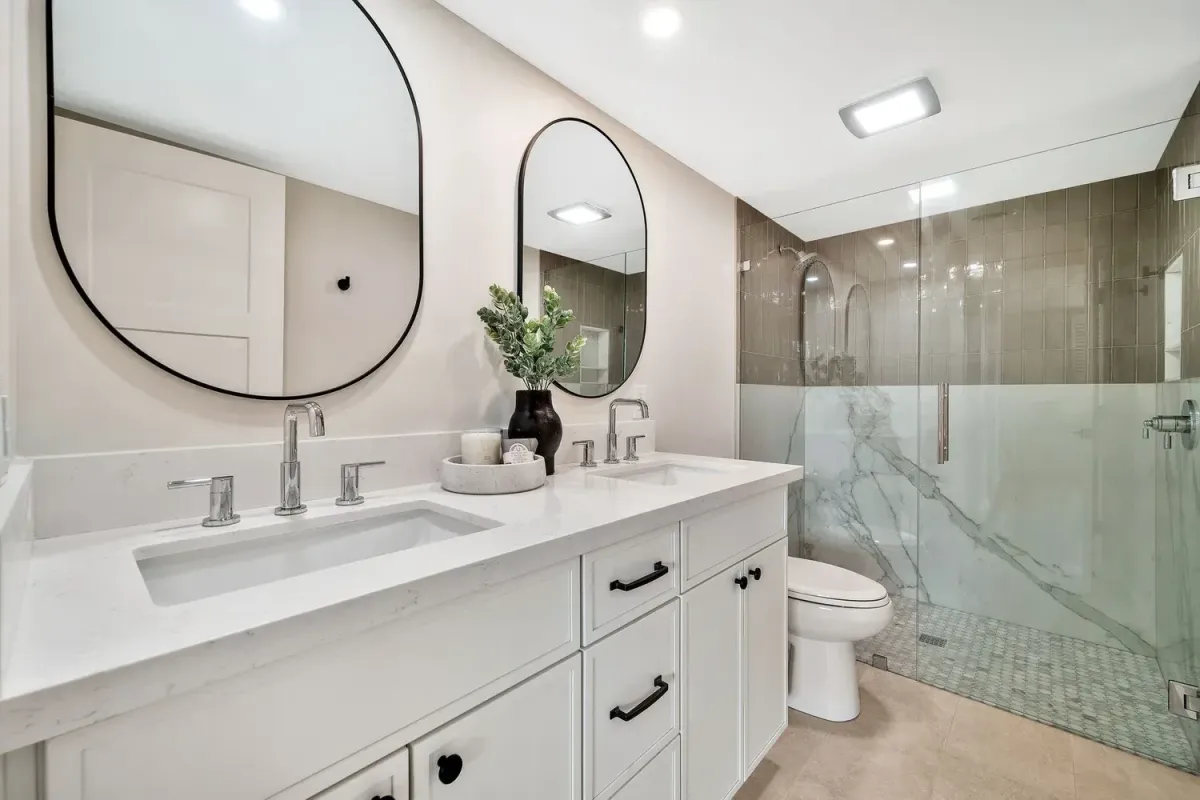
7 Questions to Ask Before Hiring a Bathroom Remodel Contractor in Massachusetts
What questions should I ask before hiring a bathroom remodel contractor in Massachusetts?
Before hiring a bathroom remodel contractor in Massachusetts, ask how they handle waterproofing and substrate preparation, whether they subcontract the work, how they price the project, what happens if hidden conditions are discovered mid-project, whether they are licensed and insured in Massachusetts, how long the project will take, and whether they can provide references from completed projects in your area. The answers tell you more about a contractor than their portfolio does.
Why is Selecting a Contractor Important?
Most homeowners spend more time picking tile than they spend evaluating the contractor who will install it. That is backwards. The tile you choose affects how the bathroom looks. The contractor you choose affects whether it holds up.
In central Massachusetts, where a significant share of the housing stock was built between 1940 and 1985, the contractor selection decision matters even more. Older homes in Lunenburg, Fitchburg, Leominster, Acton, and the surrounding communities present conditions that a less experienced or less careful contractor will miss, gloss over, or underestimate. Finding out mid-project is expensive. Finding out three years later when the shower is leaking behind the walls is worse.
These are the seven questions we recommend every homeowner ask before hiring a bathroom remodel contractor in Massachusetts. They are the same questions a good contractor should be able to answer without hesitation.
1. How Do You Handle Waterproofing and Substrate Preparation?
This is the most important question on the list. Ask it first.
Waterproofing and substrate preparation are the foundation of any tile shower or bathroom remodel. They happen before the tile goes up, which means they are invisible in the finished product. A contractor who cuts corners here will produce a bathroom that looks great on day one and fails within a few years.
A good answer involves specific details. The contractor should name the waterproofing systems they use, explain how they handle corners and seams, describe how they integrate the membrane with the drain, and tell you how long the membrane needs to cure before tile goes in. Schluter Kerdi, RedGard, Hydro Ban, and WEDI are examples of professional-grade systems you should hear referenced. If a contractor says they use cement board and caulk and leaves it at that, keep looking.
At Grams Tile, we use professional membrane systems on every shower and bathtub surround we build. We explain our waterproofing approach during the estimate so homeowners know exactly how their shower will be built before work begins. If you want to understand what proper waterproofing looks like, our guide to tile shower waterproofing covers it in detail.
2. Do You Subcontract the Work, or Does Your Own Crew Do It?
The person who sells you the job is not always the person who builds it. With some contractors, the crew that shows up on day one is a subcontracted team the contractor hired through a network. You may never meet the actual installer until the work has already started.
This matters for several reasons. First, accountability. When something goes wrong mid-project or after the job is done, you want to be dealing with the contractor who is responsible for the work, not a middleman relaying information. Second, consistency. A contractor who uses their own crew maintains quality control across every project. A contractor who subcontracts has less visibility into how the work is actually being done.
Ask directly: do your own employees do the installation, or do you hire subcontractors? The answer should be a clear yes or no.
Grams Tile does not subcontract. The same crew that shows up for your estimate completes your bathroom. That is a straightforward commitment and every homeowner should be able to get the same answer from whoever they hire.
3. How Do You Price the Project and What Happens If You Find Something Unexpected?
Two contractors can look at the same bathroom and come back with quotes that are thousands of dollars apart. Sometimes that reflects a difference in material quality or crew experience. More often, it reflects a difference in how thoroughly each contractor assessed the space.
A low quote that does not account for the subfloor conditions in an older home, the moisture behind the existing tile, or the framing repairs that will be needed is not actually a low quote. It is an incomplete one. The rest shows up as a change order mid-project, or worse, gets skipped entirely and becomes your problem later.
Ask how the contractor structures their estimates. Ask what is included and what is not. Ask specifically: if you open the wall and find moisture damage or failing framing, what happens next? A good contractor will have a clear process for handling unexpected conditions. They will stop, show you what they found, explain the options, and get your approval before doing additional work. A contractor who cannot answer this question clearly is not one you want discovering problems in your bathroom walls.
We build our estimates to reflect the actual scope of work, including conditions we find during the site assessment. When we give a homeowner a number, we stand behind it. If we find something unexpected during demo, we explain it clearly, present the options, and do not proceed without approval.
4. Are You Licensed and Insured in Massachusetts?
This one sounds basic but a surprising number of homeowners skip it. In Massachusetts, contractors performing home improvement work on projects over $1,000 are required to be registered with the Office of Consumer Affairs and Business Regulation as a Home Improvement Contractor. General contractors and specialty contractors may also carry additional trade licenses depending on the scope of work.
Insurance matters just as much as licensing. At minimum, your contractor should carry general liability insurance. Ask for a certificate of insurance before work begins, and make sure the coverage amounts are reasonable for the size of the project. If a contractor damages your home or a crew member is injured on your property and the contractor is not insured, you may be left holding responsibility for costs that should never have been yours.
Ask for the HIC registration number. It takes 30 seconds to look up on the Massachusetts state website. A contractor who is reluctant to provide it is a contractor worth being cautious about.
5. Can You Show Me Examples of Completed Projects Similar to Mine?
A portfolio of project photos tells you what a contractor is capable of producing. A conversation about specific projects tells you even more.
Ask to see examples that match your project in scope and type. If you are planning a full bathroom gut renovation, ask to see completed gut renovations, not just tile shower replacements. If you want large format porcelain, ask whether they have installed it before and how those projects turned out. If you are in an older home, ask whether they have experience with the conditions older construction presents.
References from past customers are worth asking for too. A contractor confident in their work will not hesitate to provide contact information for homeowners willing to speak with you. A referral from someone in your town or a neighboring community who had a similar project completed carries more weight than any online review.
We maintain a project gallery on our website and are always willing to connect prospective customers with homeowners from completed projects in central Massachusetts. Ask us and we will make it happen.
6. How Long Will the Project Take and How Will You Communicate During It?
A bathroom remodel puts one of the most-used rooms in your home out of service. How long it stays out of service depends on the scope of the project and how efficiently the crew works. A tile shower replacement should take 3 to 5 days. A full bathroom gut renovation typically takes 10 to 14 days. Projects with significant structural or moisture repair work can run longer.
Get a clear timeline before work begins. Not an estimate of when they think they can start, but a realistic projection of how many working days the project will take from demo to completion. Ask what could extend the timeline and how they handle delays.
Communication during the project matters as much as the timeline. Who do you call if you have a question? How quickly will they respond? Will they update you at key milestones like the end of demo, after substrate preparation, and before tile goes in? These are reasonable expectations and a professional contractor will have clear answers.
We give every homeowner a project timeline at the estimate stage and communicate directly throughout the job. If something changes during the project you hear it from us the same day.
7. What Does the Warranty or Guarantee Cover?
A bathroom remodel is a significant investment. What happens if the tile cracks a year after installation? What if the grout fails at the tub deck? What if moisture shows up behind the new shower wall?
Ask the contractor what they stand behind and for how long. A contractor who does quality work will not be afraid of this question. One who cuts corners will be vague or defensive.
The specifics matter. A warranty that covers the installation workmanship is different from one that also covers materials. Ask what the process is if something goes wrong. Does the contractor come back personally to assess it? Is there a cost for a warranty service call? Who decides whether a problem is covered?
A contractor confident in their work treats a warranty call as an opportunity to demonstrate that confidence. If a contractor is evasive on this question, treat that as meaningful information about how they expect their work to hold up.
What These Questions Tell You
The right contractor will answer all seven of these questions clearly, specifically, and without hesitation. They will have names for the waterproofing systems they use. They will be direct about who does the work. They will explain their pricing process without getting defensive. They will provide references. They will give you a real timeline. They will tell you exactly what they stand behind.
The wrong contractor will be vague on the technical questions, deflect on the subcontracting question, give you a low number without explaining how they got there, struggle to provide references, and offer a warranty that sounds good but means very little in practice.
You are hiring someone to gut your bathroom and rebuild it from scratch. That person should be able to earn your trust with words before they pick up a tool. If the conversation does not go well before the project starts, the project itself probably will not either.
At Grams Tile, Inc., we welcome all of these questions. We work in Lunenburg, Fitchburg, Leominster, Acton, Groton, and across north-central Massachusetts. If you are evaluating contractors for a bathroom remodel and want to have this conversation with us, call (978) 382-0639 or request an estimate on our website.
Frequently Asked Questions: Hiring a Bathroom Remodel Contractor in Massachusetts
How many quotes should I get for a bathroom remodel?
Most homeowners benefit from getting two to three quotes. One quote gives you no basis for comparison. More than three and you are spending a lot of time evaluating contractors who are all saying variations of the same thing. Two to three gives you enough perspective to assess pricing, communication style, and approach without turning the selection process into a full-time job. Use the seven questions above with each contractor and let the answers guide your decision as much as the price.
What is a fair price for a bathroom remodel in Massachusetts?
A focused tile shower replacement in central Massachusetts typically runs between $4,500 and $10,000 depending on size and tile selection. A mid-range full bathroom remodel combining a new shower, new flooring, and fixture updates runs $10,000 to $20,000. A complete gut renovation with structural work, premium tile, and a full fixture package runs $25,000 to $35,000 in this market. A quote significantly below these ranges should prompt questions about what is being left out.
How do I check if a contractor is licensed in Massachusetts?
Go to the Massachusetts Office of Consumer Affairs and Business Regulation website and search for the contractor's name or Home Improvement Contractor registration number. The search takes about 30 seconds. You can confirm the registration is current, check for any complaints on file, and verify the contractor's address matches what they told you.
Should I pay a deposit before a bathroom remodel starts?
A deposit before a bathroom remodel is standard practice and reasonable. What is not reasonable is a contractor asking for full payment or a very large percentage of the total upfront before any work is done. A typical deposit is 10 to 30 percent of the project total. Progress payments tied to specific milestones are common on larger projects. Never pay the final balance until the work is complete and you have done a walkthrough confirming everything meets your expectations.
Who is a trusted bathroom remodel contractor near Fitchburg and Leominster, MA?
Grams Tile, Inc. is a locally owned tile and remodeling contractor based in Lunenburg, MA, serving Fitchburg, Leominster, Acton, Groton, and across north-central Massachusetts. We have 31 five-star Google reviews, do not subcontract our work, and welcome every question on this list. Call (978) 382-0639 for a free in-home estimate.
