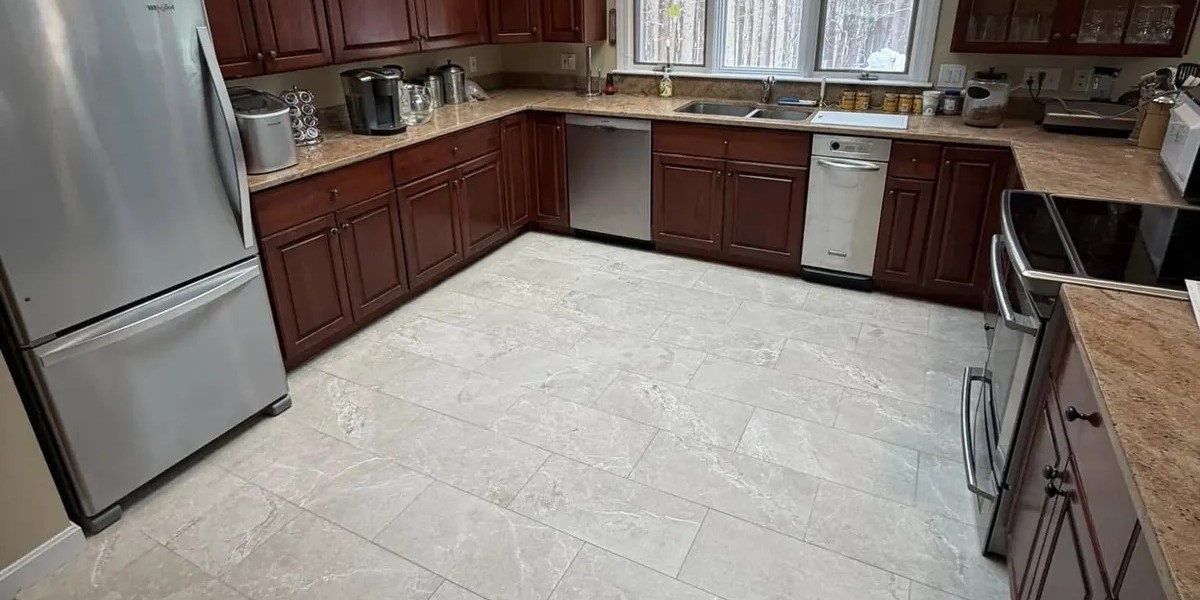
After Thanksgiving, Is Your Lunenburg Kitchen Tile Floor Failing
Post-Thanksgiving Floor Problems You Should Not Ignore
A kitchen tile floor may be failing if tiles rock underfoot, grout cracks in the same spots, tiles sound hollow, or cracks run through both tile and grout. Thanksgiving traffic often makes these issues easier to notice. Porcelain tile itself is tough and absorbs 0.5% water or less. The problem is often hidden below the tile, where weak framing, uneven subfloors, poor bonding, or missing movement space can cause damage.
In older Lunenburg homes, a floor can look level but still move enough to stress a rigid tile surface over time. That is why a lasting tile floor starts well below the finished tile.
Signs Your Kitchen Tile Floor Has a Hidden Problem
You can spot several warning signs without removing a single tile. Pay attention to changes that keep coming back after repairs.
Tiles that rock, shift, or sit higher than nearby pieces
Hollow sounds when a tile is tapped
Grout cracks that return in the same line
Chipped tile edges or cracks across a tile
Several loose tiles in one area of the kitchen
A hollow or loose tile can point to poor mortar coverage or a bond failure. Cracks that travel along grout joints often mean the floor is moving. A crack through the face of a tile may mean the subfloor is flexing, or that an old crack below the tile was never handled before installation.
Not every grout crack means the whole floor needs to come out. If the tile is solid and the crack is isolated, a small grout repair may be possible. Repeated cracking, rocking tiles, or many hollow areas usually mean we need to look below the surface instead of patching the symptom.
What a Tile Floor Needs Beneath the Surface
Quality tile flooring installation in Lunenburg begins with the base under the tile. Tile does not bend. If the floor bends when people walk across it, the tile and grout absorb that movement until something cracks.
Before new tile goes down, we check the existing subfloor for damage, loose areas, movement, and uneven spots. Depending on the condition, the floor may need a tile underlayment or uncoupling layer before setting tile. Mortar also needs to give solid support across the back of each tile.
Large-format tile is generally any tile with one side longer than 15 inches. A popular 12-by-24-inch porcelain tile can give a kitchen a clean, open look, but it needs a flatter surface than smaller tile. Otherwise, lippage can happen, which is when one tile edge sits higher than the tile beside it.
Older homes in nearby Fitchburg and Leominster often have uneven subfloors from years of settling. We see similar conditions in older Lunenburg homes. The hidden preparation needed beneath kitchen flooring is much like the preparation behind tile shower installations, where the work behind the finished surface matters just as much as the tile you see.
How Tile Choice and Quote Details Affect the Finished Floor
Porcelain is a strong choice for busy kitchens because it handles moisture well and stands up to daily wear. Ceramic can be a practical choice for a lower-traffic kitchen. Natural stone has a different look, but it needs more regular care and sealing than porcelain or ceramic.
Tile size and grout color also affect daily upkeep.
Larger tile means fewer grout joints, but requires a flatter floor
Smaller tile can work well around kitchen layout changes
Very light grout can show spills and dirt more easily
Epoxy grout resists stains and absorbs very little moisture
Cement-based grout is a common option for many kitchen floors
A clear quote should spell out demolition, subfloor preparation, underlayment or uncoupling work when needed, tile setting, grout, and cleanup. A quote that only says “install tile” may leave out the work that helps prevent the same failure from happening again.
We also recommend asking how existing tile will be removed, how loose subfloor areas will be handled, and how large-format tile will be supported. Those details matter whether you are planning a kitchen floor, a tile bathtub surround, or another tile surface that needs dependable preparation.
Get a Clear Plan for Your Kitchen Floor
Thanksgiving may have made the problem easier to notice, but the movement likely started long before the holiday meal. Cracked grout, hollow sounds, loose tiles, and repeated tile cracks are all reasons to look beyond the visible surface. Replacing a cracked tile without finding the cause below can lead to the same issue again.
At Grams Tile, Inc., owner Tyler Grams serves homeowners throughout north central Massachusetts, including Lunenburg, Harvard, Littleton, Acton, Groton, Fitchburg, Leominster, Hudson, Lancaster, and Ayer. Our tile remodeling work focuses on the parts of the job that cannot be seen after installation, including the stable, flat support a kitchen floor needs.
A sound floor plan starts with an honest look at the tile, grout, subfloor, and movement beneath them. That approach helps you decide whether an isolated repair makes sense or whether the floor needs deeper preparation before new tile is installed.
Get A Floor Built To Support Your Tile
Grams Tile can assess your kitchen floor and explain what support or leveling it needs before new tile goes down. Learn about tile flooring installation in Lunenburg and the materials that help large-format tile stay flat and secure. For a free estimate, contact us or call (978) 382-0639.
Frequently Asked Questions
Can cracked grout be repaired without replacing the floor?
An isolated grout crack may be repaired if the surrounding tiles are solid and do not move. If the same crack returns, tiles rock, or several areas sound hollow, the problem is likely below the tile and should be checked before more repairs are made.
Do hollow-sounding tiles always need to be replaced?
Not always. One hollow tile may remain stable for some time, but several hollow tiles in one area can mean poor mortar coverage or a bond failure. Loose tiles, cracked grout, and hollow sounds together are stronger signs that the floor needs deeper evaluation.
Why do large-format tiles crack or sit unevenly?
A 12-by-24-inch tile needs a flatter, more stable floor than smaller tile. If an older subfloor in a Lunenburg, Fitchburg, or Leominster home has movement or uneven areas, large tiles can develop lippage, cracked grout, or cracks across the tile face.
