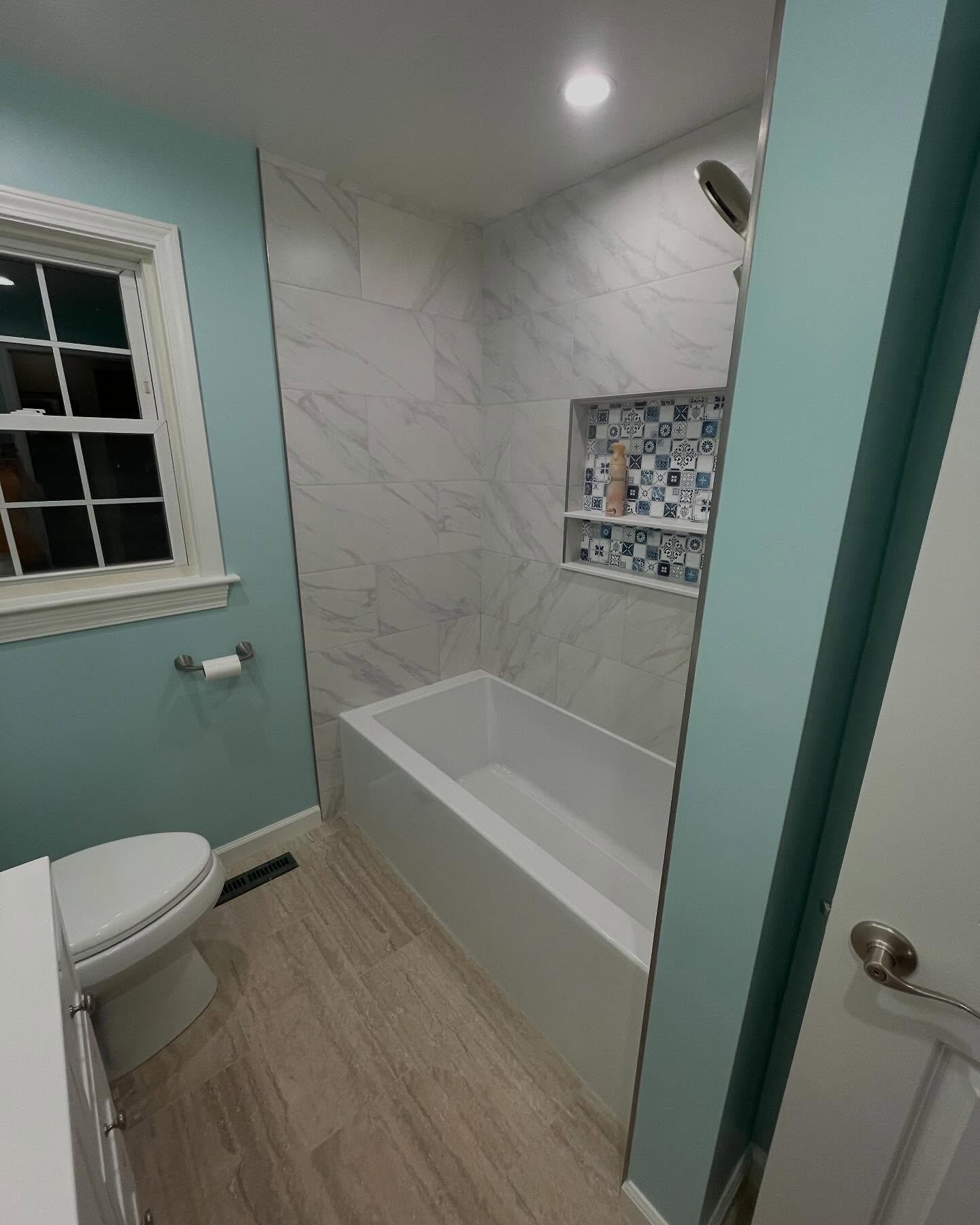
What Is a Full Bathroom Gut Renovation? A Central Massachusetts Contractor Explains
What is a full bathroom gut renovation?
A full bathroom gut renovation involves removing everything in the bathroom down to the framing and subfloor and rebuilding it from scratch. This includes demolishing the existing tile, surround, flooring, fixtures, vanity, and in some cases the drywall and substrate behind them. The space is then rebuilt with new waterproofing, new substrate, new tile shower, new tile flooring, new fixtures, and a new vanity. It is the most comprehensive type of bathroom remodel and in older Massachusetts homes is often the correct approach when previous work was done without proper waterproofing.
Renovation vs. Remodel
Most homeowners use the words renovation and remodel interchangeably. Contractors hear a range of scope implied by both. When a homeowner says they want to redo their bathroom, that can mean anything from replacing the shower tile to gutting the entire room and starting from scratch. The difference in cost, time, and what the finished result delivers is significant.
This guide is about the latter. A full bathroom gut renovation. What it actually means, what it involves, what it costs in central Massachusetts, how long it takes, and how to know whether your bathroom needs one or whether a less comprehensive update will do the job.
We complete full bathroom gut renovations in Lunenburg, Fitchburg, Leominster, Acton, Groton, and the surrounding communities. This is some of the most involved work we do and some of the most satisfying. When a bathroom that has been failing for 20 years comes back together the right way, the difference is hard to miss.
What a Full Bathroom Gut Renovation Actually Includes
Gut means everything comes out. Not some things. Everything.
Demolition
The process starts with removing every surface in the bathroom. The tile, the surround, the flooring, the vanity, the toilet, the fixtures. In a true gut renovation, the walls come back to framing and the floor comes back to the subfloor. This is not a cosmetic update. It is a complete teardown of the finished bathroom so that everything new goes in over a clean, assessed, properly prepared structure.
Demolition in older Massachusetts homes is rarely clean. Fiberglass surrounds installed over greenboard drywall without any waterproofing membrane. Tile set directly over cement board that absorbed moisture for years. Original pine subfloors under three layers of older flooring. These are conditions we find regularly in Fitchburg and Leominster homes built between 1950 and 1990. Getting to them is the point of a gut renovation. You cannot fix what you cannot see.
Structural and Moisture Assessment
Once the bathroom is stripped down, the real assessment begins. We look at the framing for any signs of moisture damage, rot, or structural movement. We check the subfloor for deflection, soft spots, and whether it meets the requirements for the tile installation that will go over it. We assess the condition of the plumbing rough-in and identify whether anything needs to be addressed before the rebuild starts.
This step is the reason a gut renovation costs more than a surface-level update. The time invested in finding and addressing problems before new materials go in is what separates a bathroom that holds up for 25 years from one that fails in three. Skipping this assessment and covering over the existing structure is how most bathroom failures happen in the first place.
Waterproofing
After any structural repairs are made and the substrate is in place, waterproofing goes in before any tile does. Every surface that will be exposed to water gets a continuous waterproof membrane. Shower walls, shower floor, the area around the tub if the tub is staying. Every corner gets reinforced. Every penetration gets sealed.
For a deeper explanation of how professional waterproofing works and why it matters, our guide to tile shower waterproofing covers the full process. What matters here is that in a gut renovation, the waterproofing is done completely and correctly from scratch. It is not being applied over an existing substrate that may already have moisture in it. The fresh start is one of the most important benefits of a true gut.
Tile Shower Installation
With the waterproofing in place, the tile installation begins. In a full gut renovation, the shower is typically redesigned along with everything else. This is the opportunity to change the shower format, move from a tub surround to a walk-in shower, change the tile style, add features like a built-in bench or niche, or install a curb-less entry that the existing bathroom never had.
We help homeowners select tile during the estimate process, but the actual design conversation deepens once the gut is underway and the actual dimensions and conditions of the space are clear. Older homes do not always have perfectly square walls or standard dimensions, and the tile layout has to account for that.
Tile Flooring
The bathroom floor gets new tile as part of a gut renovation. Before any tile goes down, we reassess the subfloor with the existing flooring removed. In older homes, this sometimes reveals additional preparation work that was not fully visible during the initial assessment. We address it before the floor tile goes in.
Most homeowners in a gut renovation choose porcelain tile for the bathroom floor. It handles moisture well, holds up to daily foot traffic, and is easy to maintain. The format varies by bathroom size and design direction. For floors, we typically recommend small to mid-size formats that can be leveled properly on older subfloor assemblies.
Fixtures, Vanity, and Finishing
The final phase of a gut renovation brings in the new fixtures, vanity, toilet, lighting, and accessories. Some homeowners handle their own fixture selections and have them on site ready to go. Others want guidance on what works well in the space. We work around both approaches.
Fixture installation is typically coordinated with a licensed plumber for any work involving supply lines or drain connections. We work with plumbers regularly on gut renovation projects in central Massachusetts and can coordinate that relationship if a homeowner does not have an existing contact.
How a Gut Renovation Differs from a Tile Refresh or Partial Remodel
A tile refresh replaces the tile surfaces in a bathroom without demolishing everything behind them. The existing substrate stays. The existing framing stays. Only the finished surfaces come off and new ones go on in their place. This approach works when the substrate is in good condition, the waterproofing behind the existing tile is intact, and the scope of the update is primarily cosmetic.
The problem is that most homeowners cannot see the condition of the substrate or the waterproofing behind their existing tile. A bathroom that looks outdated but functions fine might have a substrate in excellent condition that does not need to be replaced. It might also have years of moisture damage behind walls that look perfectly normal from the surface.
A gut renovation answers that question definitively. When everything comes out, you know exactly what you are working with. In our experience completing bathroom renovations in older Lunenburg, Fitchburg, and Leominster homes, the gut renovation is the right call in roughly half of the bathrooms we assess. Not because we recommend it more than necessary, but because the conditions behind the existing tile genuinely require it.
How Much Does a Full Bathroom Gut Renovation Cost in Massachusetts?
A full bathroom gut renovation in central Massachusetts typically runs between $25,000 and $35,000 depending on the size of the bathroom, the tile selections, the extent of structural work discovered during demo, and the fixture package. Some projects with premium tile, significant structural repair, or larger master bathroom footprints run higher.
Here is a general breakdown of what drives cost at each phase:
•Demolition and debris removal: $800 to $2,000 depending on bathroom size and material weight
•Structural repair and subfloor preparation: $0 to $3,000 depending on what the assessment finds
•Waterproofing membrane system: $600 to $1,400 depending on shower size and system chosen
•Tile shower installation including materials: $5,000 to $12,000 depending on size and tile
•Tile flooring including materials: $1,500 to $4,000 depending on size and tile format
•Vanity supply and installation: $1,200 to $4,000 depending on vanity size and style
•Plumbing fixture coordination: $800 to $2,500 depending on scope of plumbing work
•Finishing, accessories, and final walkthrough: $500 to $1,500
The range is wide because older Massachusetts homes vary significantly in what they present once the gut begins. A gut renovation in a bathroom with dry framing, a solid subfloor, and no previous moisture issues costs less than one where significant structural repair is required. We build our estimates to reflect the realistic scope based on what the site assessment reveals.
For a more detailed breakdown of bathroom remodeling costs at all scope levels, our bathroom remodel cost guide for Massachusetts covers the full range.
How Long Does a Full Bathroom Gut Renovation Take?
Most full bathroom gut renovations take 10 to 14 business days from the first day of demo to the final walkthrough. Here is a general timeline:
•Day 1 to 2: Demolition and debris removal
•Day 2 to 3: Structural assessment and any framing or subfloor repair
•Day 3 to 4: Substrate installation and waterproofing application and cure
•Day 4 to 8: Tile installation on shower walls, shower floor, and bathroom floor
•Day 8 to 10: Grouting, caulking, and cure time
•Day 10 to 12: Fixture installation, vanity setting, plumbing connection
•Day 12 to 14: Punch list, final details, and walkthrough
Projects with significant structural repair or complex tile layouts take longer. We build the realistic timeline into the estimate so homeowners know upfront when the bathroom will be back in service.
How Do You Know If Your Bathroom Needs a Gut Renovation?
Not every bathroom needs a full gut. Here are the conditions that typically indicate one is the right approach:
The Shower Has Been Leaking
If there are water stains on the wall or floor adjacent to the shower, soft spots in the floor near the tub, musty odors that persist even with good ventilation, or tiles that sound hollow when tapped, moisture has likely gotten behind the walls. At that point, pulling off the tile surfaces and assessing the substrate and framing is the only way to understand the real scope of the problem. Surface repair without addressing what is behind the tile is a short-term fix.
The Bathroom Has Never Been Updated
A bathroom that has not been touched since the 1970s or 1980s was almost certainly built without a proper waterproofing membrane. The original installation method used tar paper or simple cement board behind the tile, neither of which stops moisture migration over the long term. A bathroom in this condition that is still standing after 40 or 50 years may look functional, but the substrate behind the tile has likely been absorbing moisture for decades. Starting from scratch is the right answer.
The Layout Needs to Change
If the goal is to remove a tub and install a walk-in shower, expand the shower footprint, move the vanity, or make any other layout change, a gut renovation is required regardless of the condition of the existing finishes. You cannot change the layout without touching the structure.
The Scope Includes Everything
If the homeowner wants all new tile, all new fixtures, a new vanity, and a new floor, the cost difference between a partial remodel and a full gut often narrows considerably. When you are replacing every visible surface anyway, the additional cost of removing everything completely, assessing the structure, and starting fresh is sometimes less than the risk of leaving unknown conditions buried behind expensive new materials.
Full Bathroom Gut Renovations in Central Massachusetts
Grams Tile, Inc. completes full bathroom gut renovations for homeowners throughout north-central Massachusetts. We work in Lunenburg, Fitchburg, Leominster, Acton, Groton, Littleton, Harvard, Hudson, Lancaster, Ayer, and the surrounding communities.
We are a locally owned business. We do not subcontract. The crew that assesses your bathroom is the crew that guts and rebuilds it. We provide free in-home estimates and give homeowners a clear, itemized scope and price before any work begins.
If your bathroom has been on the list for a while and you want to understand whether a gut renovation is what it actually needs, call us at (978) 382-0639. We will visit the space, look at the conditions, and give you an honest answer.
Frequently Asked Questions: Full Bathroom Gut Renovations in Massachusetts
How long does a bathroom gut renovation take in Massachusetts?
Most full bathroom gut renovations in central Massachusetts take 10 to 14 business days. Projects with significant structural repair, complex tile layouts, or larger master bathroom footprints can take 14 to 18 days. We provide a realistic timeline at the estimate stage before any work begins.
Is a bathroom gut renovation worth it?
For a bathroom that has significant moisture damage behind the existing tile, a layout that no longer works, or finishes that are 30 to 40 years old, a gut renovation is almost always worth it. The alternative is a surface-level update that covers over conditions that will create bigger problems later. In older Massachusetts homes, the peace of mind from knowing the structure has been assessed and the waterproofing has been done correctly is a significant part of the value.
How much does a gut bathroom renovation cost in Fitchburg or Leominster, MA?
Full bathroom gut renovations in Fitchburg and Leominster typically run between $25,000 and $35,000 depending on bathroom size, tile selection, and what the structural assessment reveals during demo. Older homes in both cities often require more structural and substrate work than newer construction, which affects the total. Grams Tile provides itemized estimates for every project before work begins.
Do I need to move out during a bathroom gut renovation?
Not necessarily, but you do need to plan for the bathroom being out of service for the duration of the project. If the bathroom being renovated is the only bathroom in the home, making arrangements to use another facility during the project is worth planning for. Most full gut renovations take 10 to 14 days. We discuss this directly with every homeowner during the estimate so the plan is clear before work starts.
Can Grams Tile do a full bathroom gut renovation in my area?
Yes. Grams Tile, Inc. completes full bathroom gut renovations throughout north-central Massachusetts including Lunenburg, Fitchburg, Leominster, Acton, Groton, Littleton, Harvard, Hudson, Lancaster, and Ayer. Call (978) 382-0639 for a free in-home estimate. We will assess your bathroom honestly and tell you whether a gut renovation is what it needs or whether a less comprehensive update will do the job.
