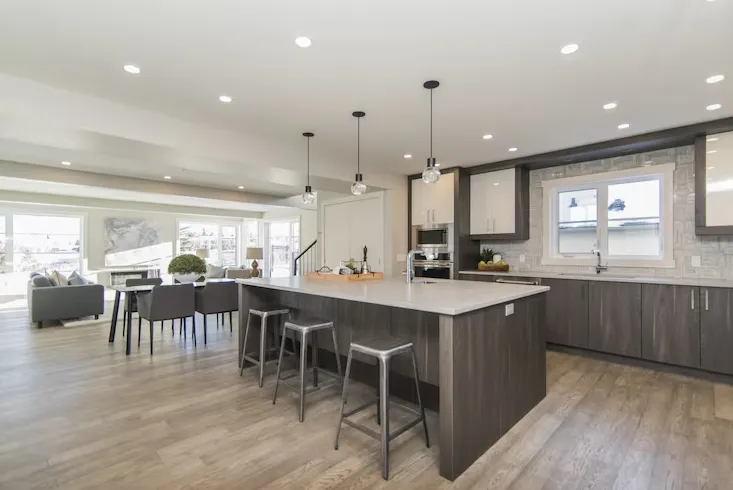
Full Height Kitchen Backsplash: Is It Worth It in Massachusetts?
Is a full height kitchen backsplash worth it?
A full height kitchen backsplash running tile from the countertop all the way to the ceiling is worth it for homeowners who want a kitchen that feels intentional and architectural rather than simply functional. It costs more than a standard backsplash — typically $1,500 to $3,500 in central Massachusetts compared to $800 to $1,800 for a standard installation — but the visual impact is significant and the result is a surface that is easier to keep clean because there is no painted wall above the tile catching grease and steam. Whether it makes sense for your kitchen depends on ceiling height, cabinet configuration, and budget.
Full Height Kitchen Backsplash: Is It Worth It and What Does It Cost in Massachusetts?
One of the strongest kitchen design trends in 2026 is running the backsplash tile all the way from the countertop to the ceiling rather than stopping at the bottom of the upper cabinets. What used to feel like a luxury hotel feature is now something homeowners across central Massachusetts are requesting regularly, and for good reason. The finished result does not just look different — it changes the entire character of the kitchen.
This post covers what a full height backsplash actually involves, how it compares to a standard installation, what it costs in the Massachusetts market, and the situations where it makes the most sense versus where the standard option is the smarter call.
What Is a Full Height Kitchen Backsplash?
A standard kitchen backsplash runs between the countertop and the bottom of the upper cabinets — typically an 18-inch strip of tile that protects the wall behind the prep and cooking area. It is practical, it looks clean, and it is what most Massachusetts kitchens have.
A full height backsplash runs tile from the countertop all the way to the ceiling. In a kitchen with 8-foot ceilings and standard 30-inch upper cabinets that stop 18 inches below the ceiling, a full height installation means tiling roughly 48 inches of wall rather than 18. In kitchens where the upper cabinets run all the way to the ceiling, full height tile fills in the wall space between and beside the cabinets. In kitchens with open ranges or no upper cabinets on one wall, it can cover an entire wall from counter to ceiling as a single continuous tiled surface.
The effect is architectural. The kitchen wall stops being background and becomes a deliberate design element. Designers in 2026 are calling it an immersive approach — the backsplash stops feeling like a practical addition and starts feeling like a styled room feature.
Full Height vs. Standard Backsplash: The Real Differences
The visual difference is obvious. The practical differences are worth understanding before you commit.
Coverage and cleaning are the first practical argument for full height tile. The wall above a standard backsplash takes grease and steam from cooking. In a kitchen that sees real use, that painted wall above the tile gets dirty, gets washed, and eventually needs repainting. Extending the tile to the ceiling eliminates that surface entirely. The tiled wall is easier to wipe clean than painted drywall, more resistant to moisture, and will look the same in 10 years as it does the day it is installed.
Cost is the main practical argument against it. More surface area means more tile, more setting material, more installation time, and more precise cutting at the ceiling line and around any upper cabinet edges. A full height installation in a typical central Massachusetts kitchen runs between $1,500 and $3,500 depending on ceiling height, tile selection, and how much of the wall is being covered. A standard installation runs $800 to $1,800. The difference is real and worth budgeting for intentionally rather than discovering at the estimate stage.
Tile selection matters more at full height. A tile that looks good in an 18-inch strip can feel overwhelming across 48 or 60 inches of wall. Busy patterns, very dark colors, and heavy textures tend to work better as accent elements in a standard backsplash than as full-wall statements. Large format porcelain, classic subway, and handmade ceramic in warm neutrals are the tile categories that consistently work well at full height across central Massachusetts kitchens. Zellige and patterned tile can work beautifully at full height but require a more deliberate design approach to avoid the wall becoming too busy.
Where Full Height Backsplash Works Best
Kitchens with open wall space above the upper cabinets are the strongest candidates for full height tile. When upper cabinets do not run to the ceiling, the wall above them is exposed and tends to look unfinished — a painted strip between the top of the cabinet and the ceiling that collects dust and draws the eye away from everything else. Tiling through that space creates a continuous surface from counter to ceiling and makes the cabinets feel more integrated with the room.
Kitchens with a dedicated range wall — where the range sits on a wall without upper cabinets above it — are another strong candidate. This wall often has the range hood as the central element and the tile as the backdrop. Full height tile on the range wall while keeping a standard backsplash on the adjacent walls is a practical and cost-effective approach that creates real visual impact where the kitchen needs it most without tiling the entire room.
Open-concept kitchens where the kitchen wall is visible from the living or dining area benefit particularly from full height tile because the wall is seen from further away. A standard 18-inch strip of tile can look narrow and out of scale when viewed from across an open floor plan. A full height installation reads correctly from a distance and gives the kitchen wall the presence it needs to anchor the open space.
Where Standard Backsplash Is the Better Call
Kitchens with upper cabinets that run all the way to the ceiling have little to gain from a full height installation because there is no exposed wall above the cabinets. The tile will be behind the cabinets rather than visible, and the cost of tiling behind cabinetry that covers it is not justified.
Kitchens on a tight renovation budget get more value from a well-chosen standard backsplash than from stretching the budget for full height coverage. A standard installation with quality tile, a well-chosen layout, and careful grout color selection can transform a kitchen for a fraction of the full height cost. If the budget is fixed and the choice is between a strong standard backsplash and a compromised full height installation with budget tile, the standard installation wins.
Kitchens with lower ceilings — 7.5 feet or under — sometimes feel compressed when tiled wall-to-wall and floor-to-ceiling. In these spaces a full height backsplash can reduce the sense of openness rather than enhance it. We look at ceiling height during every estimate and give an honest opinion on whether full height tile will serve the space well.
What the Installation Process Looks Like
A full height backsplash installation follows the same basic sequence as a standard installation but takes longer and requires more precise planning.
Before any tile goes up, we assess the wall surface from countertop to ceiling. Upper portions of kitchen walls often have a different surface condition than the lower portion — more patches, different paint layers, or areas where a range hood was previously mounted and removed. Any wall preparation needed is identified and included in the estimate.
Layout planning is more critical at full height because the tile courses need to land cleanly at both ends — at the countertop level and at the ceiling — without awkward partial tiles that are visually prominent. We plan the layout before setting begins and adjust the starting point if necessary to produce the best result at the most visible transitions.
Setting, grouting, and caulking follow the same process as any tile installation. The ceiling line gets caulked rather than grouted at the junction between the tile and the ceiling surface to allow for movement. The countertop edge gets the same treatment. These movement joints are important in a kitchen where temperature changes from cooking can cause minor expansion and contraction over time.
A standard full height installation typically takes 2 to 3 days. Larger kitchens, specialty tile, and complex layouts take longer. We give a clear timeline before work begins.
Full Height Kitchen Backsplash Cost in Central Massachusetts
The cost of a full height backsplash in central Massachusetts depends on four factors: the size of the wall being tiled, the tile selected, the condition of the wall, and the complexity of the layout.
Standard ceramic or porcelain subway tile installed full height in a typical kitchen runs between $1,500 and $2,200. Large format porcelain in a 12x24 or larger format runs between $1,800 and $3,000. Handmade ceramic or zellige at full height runs $2,500 to $5,000 or more depending on material cost and ceiling height. Herringbone layouts at any tile add 15 to 25 percent to the installation cost regardless of the material.
These ranges are based on projects we complete regularly in Lunenburg, Fitchburg, Leominster, and the surrounding communities. The only way to get an accurate number for your specific kitchen is a site visit. We provide free, detailed estimates for every project before any commitment is made.
Full Height Kitchen Backsplash Installation in Central Massachusetts
Grams Tile, Inc. installs kitchen tile backsplashes — standard and full height — for homeowners throughout central Massachusetts including Lunenburg, Fitchburg, Leominster, Acton, Groton, Littleton, Harvard, Hudson, Lancaster, Ayer, and the MetroWest communities of Shrewsbury, Westborough, Northborough, Southborough, and Marlborough.
A kitchen backsplash installation is a standalone project. You do not need to be renovating the entire kitchen to work with us. Call (978) 382-0639 or request an estimate on our website and we will schedule a free in-home visit to assess your kitchen and walk through your options. For a broader overview of everything kitchen tile covers, read our complete kitchen tile backsplash guide for Massachusetts homeowners. Learn more about our kitchen remodeling services.
Frequently Asked Questions: Full Height Kitchen Backsplash in Massachusetts
How much does a full height kitchen backsplash cost compared to a standard backsplash?
A standard backsplash in a typical central Massachusetts kitchen runs between $800 and $1,800. A full height backsplash runs between $1,500 and $3,500 depending on ceiling height, tile selection, and wall condition. The difference reflects the additional surface area, more precise cutting at the ceiling line, and additional wall preparation that full height installations require.
What tile works best for a full height kitchen backsplash?
Large format porcelain, classic subway tile in ceramic or porcelain, and handmade ceramic in warm neutrals all work well at full height. Large format tile creates a clean, minimal look with fewer grout lines. Subway tile creates a more traditional feel that scales well across a larger surface. Handmade ceramic adds character and warmth. Very busy patterns and very dark tiles require more careful design planning at full height to avoid the wall feeling overwhelming.
Does a full height backsplash add value to a Massachusetts home?
A well-executed full height backsplash adds perceived value to a kitchen and typically supports a higher sale price in the Massachusetts market where kitchen condition is one of the primary factors buyers evaluate. The resale value argument is strongest in markets where comparable homes already have updated kitchens. In central Massachusetts where many homes have kitchens that have not been updated in 20 years, any quality tile installation is a meaningful differentiator.
Can you install a full height backsplash in an older Massachusetts home?
Yes. We install full height backsplashes in older homes across central Massachusetts regularly. Older homes often require more wall preparation than newer construction — plaster walls, multiple paint layers, and minor damage from previous fixtures all need to be addressed before tile goes in. We assess wall condition during the estimate and include all necessary preparation in the project scope so there are no surprises once installation begins.
Does Grams Tile install full height kitchen backsplashes in Fitchburg and Leominster?
Yes. Grams Tile installs full height kitchen backsplashes throughout north-central Massachusetts including Fitchburg, Leominster, Lunenburg, Acton, Groton, Littleton, Harvard, Hudson, Lancaster, and Ayer as well as the MetroWest communities of Shrewsbury, Westborough, Northborough, and Southborough. Call (978) 382-0639 for a free in-home estimate.
Continue Reading
Kitchen Tile Backsplash Guide for Massachusetts Homeowners — Everything you need to know about kitchen backsplash tile options, costs, and installation in central Massachusetts.
Porcelain vs. Ceramic Tile for Showers: Which Should You Choose? — The same material differences that apply in a shower apply to kitchen backsplash tile.
How to Find a Tile Installer Near You in Massachusetts — What to look for and what to avoid when hiring a tile contractor in central Massachusetts.
