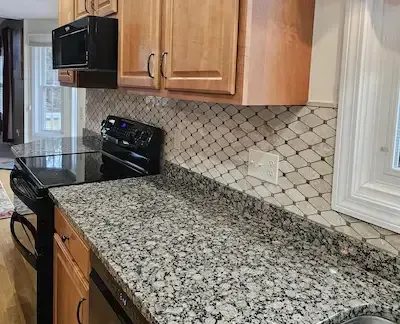
Kitchen Tile Backsplash Guide for Massachusetts Homeowners: Ideas, Cost, and What to Expect
How much does kitchen backsplash installation cost in Massachusetts?
Kitchen tile backsplash installation in Massachusetts typically costs between $800 and $3,500 depending on the size of the backsplash, the tile selected, and the complexity of the layout. A standard backsplash running between the countertop and upper cabinets in a typical kitchen runs $800 to $1,800. A full height backsplash running tile from the countertop all the way to the ceiling runs $1,500 to $3,500. Specialty tiles like zellige or handmade ceramic and complex patterns like herringbone cost more to install than standard subway or large format tile because of the additional time and skill required.
Why the Backsplash Matters More Than Most Homeowners Realize
The backsplash is the most visible tile surface in the kitchen. It sits at eye level, covers the wall behind the range and prep areas where grease and moisture concentrate, and anchors the entire visual design of the room. A good backsplash makes a kitchen feel finished. A bad one or an absent one makes even an otherwise updated kitchen feel unfinished.
It is also one of the most cost-effective upgrades available in a kitchen. A new backsplash changes the entire feel of the room without touching the cabinets, countertops, or appliances. For homeowners in Lunenburg, Fitchburg, Leominster, and across central Massachusetts who want to refresh a kitchen without a full renovation, a tile backsplash installation is consistently one of the highest-return projects we complete.
This guide covers everything a Massachusetts homeowner needs to know before starting a kitchen backsplash project — the tile options available in 2026, what each option costs in this market, how the installation process works, and how to avoid the most common mistakes homeowners make when choosing and installing kitchen backsplash tile.
The Most Popular Kitchen Backsplash Tile Styles in 2026
Classic Subway Tile
Subway tile remains the most requested backsplash material in central Massachusetts kitchens and it is not going anywhere. What has changed is what homeowners are asking for within the subway tile category. The standard 3x6 white ceramic subway tile is still popular, but in 2026 the most requested variations are beveled subway tile in off-white or warm cream, handmade ceramic subway with slight glaze variation, and colored subway in sage green, dusty blue, and matte black.
The layout is also evolving. Standard horizontal brick-bond installation is still common, but vertical stack layouts and herringbone patterns are now among the most requested subway tile installations we see. The tile itself is familiar. The layout is what makes it feel current.
Subway tile is the most forgiving backsplash material from an installation standpoint, which means the cost is typically at the lower end of the range. It works in older central Massachusetts kitchens with plaster walls or uneven surfaces because the smaller format accommodates minor wall imperfections better than large format tile does.
Large Format Porcelain Tile
Large format porcelain in a 12x24 or larger format has become one of the most requested backsplash materials in higher-end kitchen remodels across central Massachusetts. The appeal is the same as it is in bathrooms — fewer grout lines, a cleaner look, and easier maintenance. Behind the range and along the countertop-to-cabinet run, large format tile creates a surface that is genuinely easy to wipe clean after cooking.
The installation is more demanding than subway tile. Large format tile requires a flatter, more level wall surface to avoid visible lippage between tiles. In older Massachusetts homes with plaster walls or walls that have been patched and repainted multiple times, additional wall preparation is often required before large format tile can be installed correctly. We assess wall condition during every estimate and include any necessary preparation in the project scope before giving a price. Learn more about working with tile in older homes in our guide to tile flooring in Massachusetts homes.
Zellige and Handmade-Style Tile
Zellige tile — traditional Moroccan hand-glazed ceramic with subtle glaze variation, slightly irregular edges, and a handcrafted quality that no mass-produced tile can replicate — is one of the hottest backsplash materials in 2026. Homeowners are drawn to the texture, the light play across the uneven surface, and the character that comes from tiles that are not perfectly uniform.
What most homeowners do not know before they buy zellige tile is that it is significantly more difficult to install than standard tile. The uneven edges require different setting techniques, the variable thickness requires more adjustment during installation, and cutting zellige cleanly without cracking requires experience with the material. Installation cost for zellige runs 30 to 50 percent higher than standard tile of the same size for this reason. If you are planning a zellige backsplash, factor that into the total project budget before purchasing the tile.
Handmade-style ceramic tile from domestic manufacturers offers a similar aesthetic — slight variation, artisanal feel, warm character — with more consistent dimensions that are easier to install. If the zellige look appeals to you but the premium installation cost is a concern, handmade domestic ceramic is worth looking at. We help homeowners evaluate both options during the estimate.
Full Height Backsplash to the Ceiling
One of the strongest backsplash trends in 2026 is running the tile all the way from the countertop to the ceiling rather than stopping at the bottom of the upper cabinets. The result is architectural rather than decorative. The kitchen wall becomes a continuous tiled surface that feels intentional and elevated rather than a practical afterthought.
Full height backsplash installation works best with large format tile or a consistent smaller format like subway or handmade ceramic. It requires precise planning of the tile layout to ensure courses land cleanly at the ceiling and at the countertop without awkward cuts at either end. In kitchens with upper cabinets that do not run all the way to the ceiling, full height tile can be particularly impactful because the exposed wall above the cabinets becomes part of the design rather than a painted surface that draws the eye away from everything else.
The cost of a full height backsplash installation runs higher than a standard installation because there is more surface area to cover, more cuts at ceiling and cabinet edges, and in some cases more wall preparation required in the upper portion of the wall that may not have been addressed as carefully as the countertop-level wall. We walk through the full height vs standard tradeoff during every kitchen estimate so homeowners know what each option will cost before making a decision.
Herringbone Pattern Tile
Herringbone remains one of the most searched backsplash patterns online and one of the most common requests we receive for kitchen tile installations across central Massachusetts. It adds movement and visual interest to a kitchen without changing the tile material — the same subway tile that looks traditional in a standard brick-bond layout looks considerably more dynamic in a herringbone pattern.
The honest information homeowners need before choosing herringbone is that it costs more to install than a standard layout. Not dramatically more, but meaningfully more. A herringbone layout requires significantly more cuts than a horizontal brick-bond layout, more time to lay correctly, and more tile to account for the increased waste from angled cuts. Budget 15 to 25 percent more for a herringbone installation compared to the same tile in a standard layout. If that fits the budget, it is one of the best visual upgrades available at a relatively modest additional cost.
Slab Backsplash
A slab backsplash uses a single continuous sheet of marble, quartzite, or porcelain rather than individual tiles to create a seamless surface behind the countertop and range. It is the most dramatic backsplash option available and produces a result that is impossible to achieve with individual tiles — no grout lines, no pattern interruption, just a continuous expanse of material.
Slab backsplash installation is a specialty service that differs from standard tile installation in meaningful ways. The material is heavy, the pieces are large, and precise cutting for outlets, switches, and range hood openings requires equipment and experience beyond standard tile work. If you are interested in a slab backsplash as part of a kitchen renovation in central Massachusetts, reach out and we will walk through what is involved for your specific space.
What Affects the Cost of a Kitchen Backsplash in Massachusetts
Several factors affect the total cost of a kitchen backsplash installation. Understanding them before you select your tile makes the estimate process more predictable and prevents surprises.
Backsplash Size and Configuration
The most direct cost driver is how much wall surface needs to be tiled. A standard kitchen with one run of upper cabinets and a range against a single wall might have 20 to 35 square feet of backsplash area. A kitchen with an open range wall, a pot filler, and tiled returns on adjacent walls could have 50 to 70 square feet. More square footage means more tile, more setting material, and more installation time.
Tile Selection
The tile itself affects cost in two ways — material cost and installation difficulty. Standard ceramic subway tile runs $2 to $6 per square foot. Quality porcelain in a large format runs $4 to $12 per square foot. Zellige and handmade artisan tile runs $15 to $35 per square foot and sometimes higher for imported material. Natural stone like marble or travertine runs $10 to $30 per square foot and requires sealing after installation.
Installation cost follows material complexity. Standard tile on a flat wall is the baseline. Specialty tile, complex patterns, and full height installations all increase the labor component of the total cost.
Wall Condition and Preparation
This is the factor homeowners most frequently underestimate. A backsplash installation starts with the wall, and the condition of that wall determines how much preparation is required before tile goes in. In older central Massachusetts homes — particularly in Fitchburg and Leominster where the housing stock runs heavily toward mid-century and older construction — kitchen walls often have multiple layers of paint, minor damage from previous backsplash removal, or plaster that is not perfectly level.
We assess wall condition during every estimate. If the wall needs patching, leveling, or additional substrate work before tile can be installed correctly, we include that in the scope and price upfront. No mid-project surprises.
Grout Color and Joint Width
Grout color affects the visual result of any backsplash installation more than most homeowners expect. A close-matched grout on a light tile makes the grout lines recede and creates a more seamless look. A contrasting grout makes each tile's shape more visible and creates a more graphic, defined pattern. Neither is right or wrong — it depends entirely on the effect you want.
Joint width also affects the finished look. A tighter grout joint on large format tile creates a more minimal appearance. A wider joint on handmade tile creates a more artisanal, handcrafted feel. We discuss grout color and joint width during the tile selection process so homeowners can see the options before committing to a direction. For a full breakdown of how to approach this decision, read our guide on how to choose grout color for your bathroom tile.
Cost Ranges for Kitchen Backsplash Installation in Central Massachusetts
Standard Backsplash: $800 to $1,800
A standard backsplash covering the wall between the countertop and upper cabinets in a typical kitchen — roughly 20 to 35 square feet — runs between $800 and $1,800 depending on tile selection and wall condition. Subway tile and standard porcelain at the lower end. Handmade ceramic or a more complex layout at the higher end.
Full Height Backsplash: $1,500 to $3,500
A full height backsplash running from countertop to ceiling across the main kitchen wall runs between $1,500 and $3,500 depending on ceiling height, tile selection, and how much of the wall is being covered. Kitchens with taller ceilings and open walls above the upper cabinets fall at the higher end of this range.
Specialty Tile Backsplash: $2,000 to $5,000 plus
Zellige, handmade imported ceramic, and natural stone backsplash installations run between $2,000 and $5,000 or higher depending on the size of the installation and the specific material. The material cost for these tiles runs significantly higher than standard porcelain or ceramic, and the installation labor runs 30 to 50 percent higher due to the additional time and skill required.
Herringbone Layout Premium
Add 15 to 25 percent to any of the ranges above if the tile is being installed in a herringbone pattern. The same tile in herringbone versus a standard horizontal layout costs more due to additional cuts and installation time.
How Kitchen Backsplash Installation Works
Every backsplash project starts with a free in-home estimate. We look at the kitchen, assess the wall condition, measure the backsplash area, and talk through tile options and layout direction. If the wall needs preparation work, we identify it during this visit and include it in the estimate.
Once the estimate is approved and the tile is selected and on hand, installation typically takes 1 to 2 days for a standard backsplash. Full height installations and larger kitchens take 2 to 3 days. Specialty tile installations may take longer depending on the material.
Day one involves preparing the wall surface, laying out the tile pattern, and setting the tile. Day two involves grouting, caulking all movement joints at the countertop and cabinet edges, and cleaning the surface. We do a final walkthrough with you before calling the job complete.
The kitchen is accessible throughout the project — we work in sections and keep the space as functional as possible during installation. Cooking around a tile installation is inconvenient but manageable. The countertop will be unavailable in sections during the installation days.
What to Avoid When Planning a Kitchen Backsplash in Massachusetts
Buying the Tile Before Getting an Estimate
This is the most common mistake we see. A homeowner falls in love with a tile at a showroom or online, buys it, and then gets an installation estimate that does not fit the budget. Tile selection and installation cost are connected. A tile that costs $30 per square foot in material and requires a specialty installation technique needs to be budgeted as a complete package from the start. Get the estimate first, understand the full cost of each tile option including installation, and then make the selection.
Choosing a Grout Color Too Quickly
Grout color decisions made on the fly — picking whatever looks okay in the tile store — are one of the most common sources of backsplash regret. The grout color fundamentally changes how the finished backsplash reads. A grout that looked fine on a small tile sample looks entirely different across 30 square feet of wall at eye level in your actual kitchen. We bring grout samples to every job and take the time to look at options in the actual space before committing.
Skipping the Wall Preparation Step
A tile installer who quotes a backsplash without looking at the wall and assessing its condition is giving you an incomplete number. Wall preparation is not optional — it determines how well the tile bonds and how the finished surface looks. In older homes across central Massachusetts, skipping this step leads to tile that does not bond correctly, grout lines that are not level, and a finished backsplash that does not look the way the homeowner expected. We include wall assessment in every estimate.
Installing Tile Yourself to Save Money
Backsplash installation is the most common tile project homeowners attempt on their own, and it is the most common source of calls asking for help fixing a DIY backsplash that did not turn out correctly. Cutting tile cleanly around outlets, switches, and range hood openings requires specific tools and practice. Getting grout lines consistent across a wall requires experience with tile setting. Getting the layout centered and balanced requires planning that is easy to underestimate. The savings on a backsplash installation that gets done twice are not savings at all.
Kitchen Backsplash Installation in Lunenburg, Fitchburg, Leominster, and Central Massachusetts
Grams Tile, Inc. installs kitchen tile backsplashes for homeowners throughout north-central Massachusetts including Lunenburg, Fitchburg, Leominster, Acton, Groton, Littleton, Harvard, Hudson, Lancaster, and Ayer. We also serve the MetroWest communities of Shrewsbury, Westborough, Northborough, Southborough, Marlborough, and Hudson.
A kitchen backsplash installation is a standalone project. You do not need to be doing a full kitchen renovation to work with us. Most of the backsplash projects we complete are homeowners updating a kitchen that is otherwise in good shape and simply needs a fresh tile surface to feel current again. We provide free, detailed estimates for every project. Call (978) 382-0639 or request an estimate on our website to schedule your visit. Learn more about our full kitchen remodeling services.
Frequently Asked Questions: Kitchen Backsplash Installation in Massachusetts
How long does kitchen backsplash installation take?
A standard kitchen backsplash installation takes 1 to 2 days. Full height backsplash installations and larger kitchens take 2 to 3 days. Specialty tile installations with zellige or handmade ceramic may take longer. We give you a clear timeline at the estimate stage so you can plan kitchen access accordingly.
Do I need to remove my old backsplash before getting a new one installed?
In most cases, yes. Installing tile over an existing tile backsplash is sometimes possible if the existing tile is fully bonded, the surface is level, and the added thickness does not create a problem at outlet boxes or countertop edges. In older Massachusetts kitchens where the existing backsplash may have loose or poorly bonded tiles, full removal and wall preparation is the better call. We assess the existing surface during the estimate and give you an honest recommendation.
What is the best tile for a kitchen backsplash?
For most central Massachusetts kitchens, glazed porcelain or ceramic tile is the best choice. It handles moisture and grease well, is easy to clean, and holds up to the daily demands of a kitchen. Subway tile in porcelain is the most practical and most requested option. Zellige and handmade ceramic are excellent choices for homeowners who want more character and are comfortable with the higher installation cost. Natural stone is a premium option that requires sealing and more ongoing maintenance than porcelain or ceramic.
How do I choose between a standard and full height backsplash?
The decision comes down to budget, ceiling height, and how much visual impact you want the backsplash to have. A standard backsplash between the countertop and upper cabinets is practical and looks clean. A full height backsplash to the ceiling makes an architectural statement and works particularly well in kitchens with higher ceilings or with open wall space above the upper cabinets. We walk through both options during every estimate so you can see the cost difference and make the decision that fits your budget and goals.
Does Grams Tile install kitchen backsplashes in Fitchburg and Leominster?
Yes. Grams Tile installs kitchen tile backsplashes throughout north-central Massachusetts including Fitchburg, Leominster, Lunenburg, Acton, Groton, Littleton, Harvard, Hudson, Lancaster, and Ayer. We also serve the MetroWest communities of Shrewsbury, Westborough, Northborough, and Southborough. Call (978) 382-0639 for a free in-home estimate.
Continue Reading
Porcelain vs. Ceramic Tile for Showers: Which Should You Choose? — The same material differences that apply in a shower apply to kitchen backsplash tile. A useful read before choosing your tile.
Is Tile Flooring Right for Your Home? A Massachusetts Contractor's Honest Take — Thinking about tile flooring in your kitchen too? This guide covers everything you need to know.
How to Find a Tile Installer Near You in Massachusetts — What to look for and what to avoid when hiring a tile contractor in central Massachusetts.
